
Introduction to Concatenation in Excel
Concatenation in Excel is the process of combining two or more text strings into a single string. This can be useful in a variety of situations, such as when you need to combine first and last names, or when you need to create a full address from separate columns for street, city, state, and zip. In this article, we will explore the different ways to concatenate in Excel, including using formulas, functions, and shortcuts.
Using the Concatenation Formula
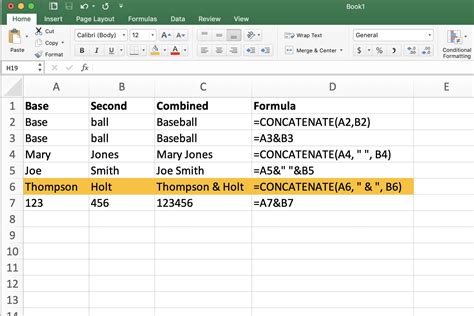
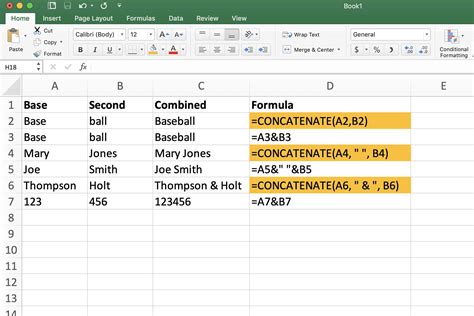
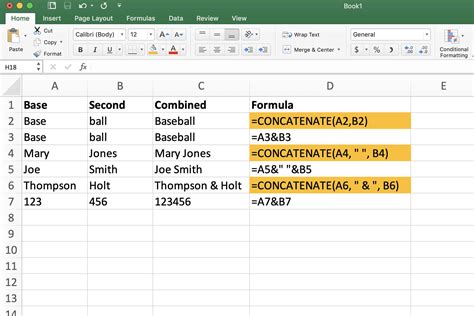
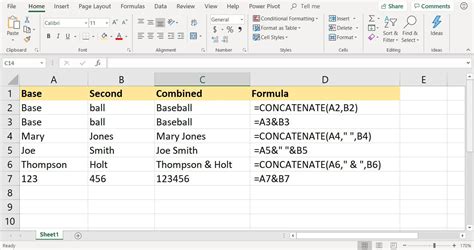
The most basic way to concatenate in Excel is by using the concatenation formula. This formula uses the ampersand (&) symbol to combine two or more text strings. For example, if you have a column for first names and a column for last names, you can use the following formula to combine them: =A1&” “&B1 This formula combines the values in cells A1 and B1, with a space in between. You can adjust this formula to fit your specific needs, such as combining multiple columns or adding additional text.
Using the Concatenate Function
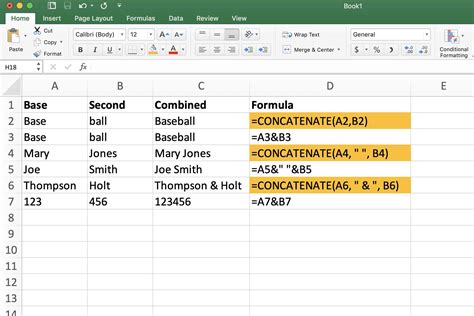
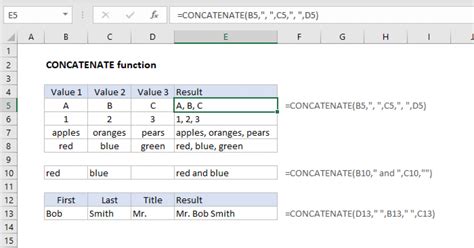
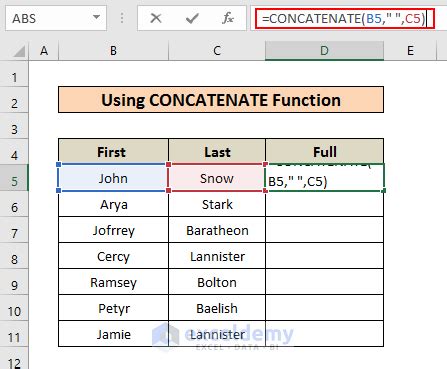
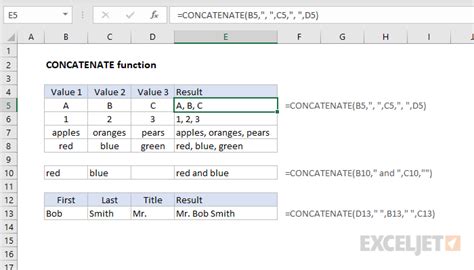
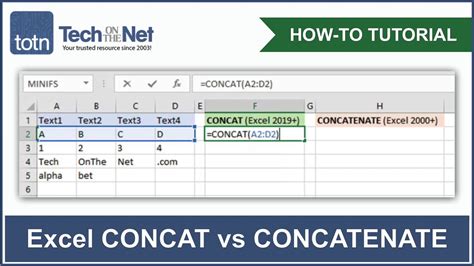
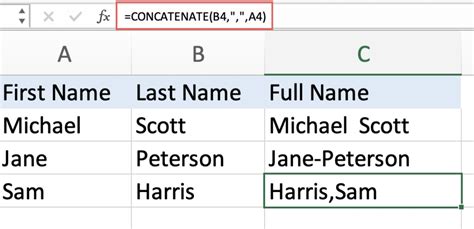
In addition to the concatenation formula, Excel also has a built-in Concatenate function. This function allows you to combine multiple text strings into a single string, using the following syntax: =CONCATENATE(text1, [text2], …) For example: =CONCATENATE(A1, ” “, B1) This formula combines the values in cells A1 and B1, with a space in between. The Concatenate function can be used to combine multiple columns, or to add additional text to your concatenated string.
Using the TEXTJOIN Function
The TEXTJOIN function is a newer function in Excel that allows you to combine multiple text strings into a single string, with a specified delimiter. The syntax for the TEXTJOIN function is: =TEXTJOIN(delimiter, ignore_empty, text1, [text2], …) For example: =TEXTJOIN(” “, TRUE, A1, B1) This formula combines the values in cells A1 and B1, with a space in between. The TEXTJOIN function can be used to combine multiple columns, or to add additional text to your concatenated string.
Using Shortcuts to Concatenate
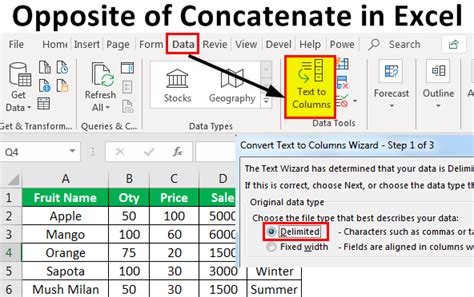
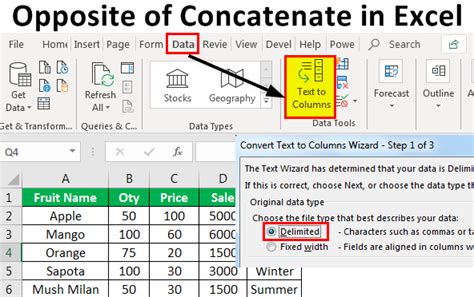
In addition to using formulas and functions, there are also several shortcuts you can use to concatenate in Excel. For example, you can use the Flash Fill feature to automatically fill in a column with concatenated values. To use Flash Fill, follow these steps:
- Select the column you want to fill with concatenated values
- Type the concatenated value for the first cell in the column
- Go to the Data tab and click on Flash Fill
- Excel will automatically fill in the rest of the column with concatenated values
- Select the cell with the concatenated value you want to fill
- Go to the Home tab and click on Fill
- Select the direction you want to fill (e.g. down, right, etc.)
- Excel will automatically fill in the rest of the column with concatenated values
Common Errors to Avoid
When concatenating in Excel, there are several common errors to avoid. These include:
- Forgetting to include spaces or other delimiters between text strings
- Using the wrong syntax for formulas or functions
- Not accounting for blank cells or other errors in your data
Best Practices for Concatenation
To get the most out of concatenation in Excel, follow these best practices:
- Use consistent formatting and syntax throughout your formulas and functions
- Test your formulas and functions to ensure they are working correctly
- Use comments or other documentation to explain complex formulas or functions
💡 Note: When concatenating dates or numbers, make sure to format them correctly to avoid errors.
| Function | Syntax | Description |
|---|---|---|
| Concatenation Formula | =A1&" "&B1 | Combines two or more text strings into a single string |
| Concatenate Function | =CONCATENATE(text1, [text2], ...) | Combines multiple text strings into a single string |
| TEXTJOIN Function | =TEXTJOIN(delimiter, ignore_empty, text1, [text2], ...) | Combines multiple text strings into a single string, with a specified delimiter |
In summary, concatenation is a powerful tool in Excel that can be used to combine two or more text strings into a single string. By using formulas, functions, and shortcuts, you can efficiently and accurately concatenate your data. Remember to avoid common errors and follow best practices to get the most out of concatenation in Excel.
What is concatenation in Excel?
+
Concatenation in Excel is the process of combining two or more text strings into a single string.
What is the difference between the Concatenate function and the TEXTJOIN function?
+
The Concatenate function combines multiple text strings into a single string, while the TEXTJOIN function combines multiple text strings into a single string, with a specified delimiter.
How do I avoid common errors when concatenating in Excel?
+
To avoid common errors, make sure to carefully review your formulas and data before concatenating, and use consistent formatting and syntax throughout your formulas and functions.