

Introduction to Moral Psychology
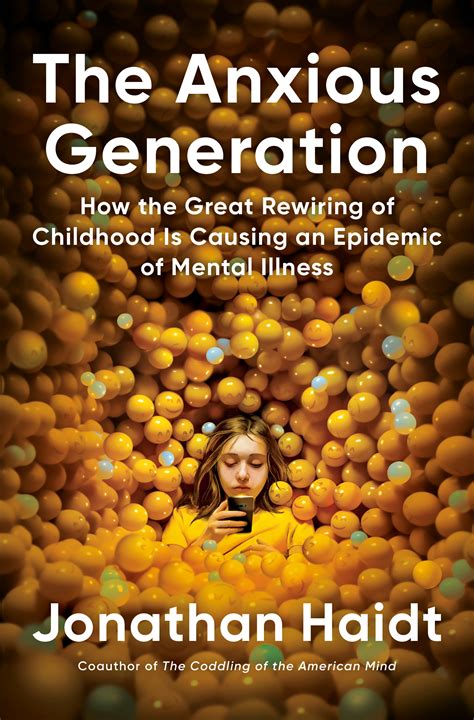
Moral psychology is a field of study that explores the psychological and philosophical foundations of human morality. It seeks to understand how humans develop moral values, make moral decisions, and interact with others in moral contexts. One of the leading researchers in this field is Jonathan Haidt, a social psychologist who has made significant contributions to our understanding of moral psychology. In this article, we will delve into Haidt’s insights on moral psychology and explore the key concepts and theories that underlie his work.
Jonathan Haidt’s Background and Research
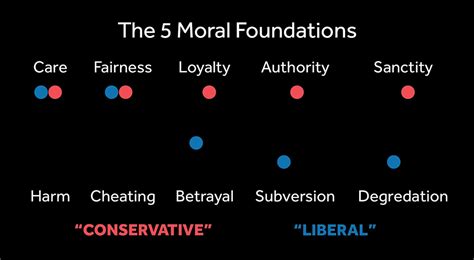
Jonathan Haidt is a social psychologist who has spent many years studying moral psychology. He received his Ph.D. in psychology from the University of Pennsylvania and is currently a professor at New York University’s Stern School of Business. Haidt’s research focuses on the psychological and cultural factors that shape human morality, and he has published numerous papers and books on this topic. His most famous book, The Righteous Mind: Why Good People Are Divided by Politics and Religion, provides a comprehensive overview of his theory of moral psychology.
Moral Foundations Theory
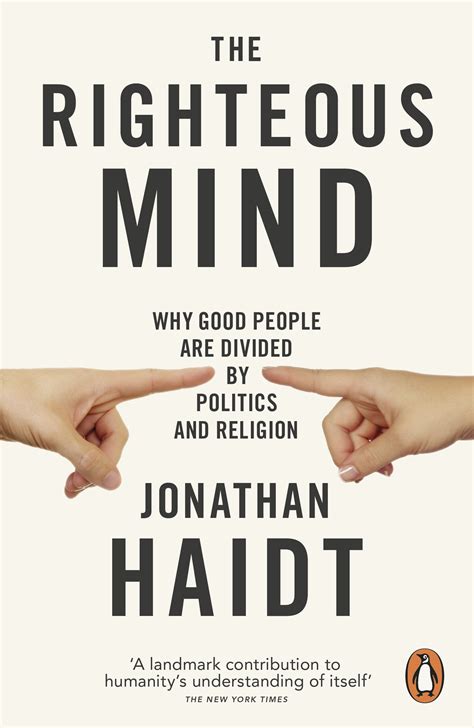
At the heart of Haidt’s work is the Moral Foundations Theory (MFT), which posits that human morality is based on six innate moral foundations. These foundations are: * Care/Harm: the desire to care for and protect others from harm * Fairness/Cheating: the desire to treat others fairly and avoid cheating or exploitation * Loyalty/Betrayal: the desire to be loyal to one’s group or community and avoid betraying its trust * Authority/Subversion: the desire to respect authority and avoid subverting social norms or hierarchies * Sanctity/Degradation: the desire to uphold moral and spiritual values and avoid degrading or desecrating them * Liberty/Oppression: the desire to promote individual freedom and avoid oppression or tyranny
These moral foundations are thought to be universal across human cultures and are shaped by evolutionary pressures. Haidt argues that different cultures and societies place varying emphasis on these foundations, which can lead to moral disagreements and conflicts.
The Role of Intuition in Moral Decision-Making
Haidt’s work also highlights the importance of intuition in moral decision-making. He argues that moral judgments are often made quickly and automatically, without conscious reasoning or deliberation. This is because our brains are wired to respond rapidly to moral stimuli, using mental shortcuts and heuristics to guide our decisions. While reasoning and reflection can play a role in moral decision-making, intuition is often the primary driver of our moral judgments.
The Difference Between Liberals and Conservatives
One of the key insights from Haidt’s research is that liberals and conservatives tend to prioritize different moral foundations. Liberals tend to emphasize the Care/Harm and Fairness/Cheating foundations, while conservatives tend to emphasize the Loyalty/Betrayal, Authority/Subversion, and Sanctity/Degradation foundations. This difference in moral emphasis can lead to disagreements and conflicts between liberals and conservatives, as each side may view the other as morally flawed or misguided.
Implications for Moral Psychology and Society
Haidt’s work has significant implications for our understanding of moral psychology and its relevance to society. By recognizing the importance of intuition and the diversity of moral foundations, we can better appreciate the complexities of human morality and the challenges of moral disagreement. This understanding can also inform strategies for promoting moral dialogue and cooperation, both within and across cultures.
👍 Note: Haidt's work emphasizes the importance of empathy and understanding in bridging moral divides, rather than simply trying to "win" arguments or convert others to our point of view.
Conclusion and Future Directions
In conclusion, Jonathan Haidt’s insights on moral psychology offer a nuanced and comprehensive understanding of human morality. By recognizing the role of intuition, the diversity of moral foundations, and the differences between liberals and conservatives, we can gain a deeper appreciation for the complexities of human morality. Future research in moral psychology can build on Haidt’s work, exploring new avenues for promoting moral dialogue, cooperation, and understanding in an increasingly diverse and globalized world.
What is the Moral Foundations Theory?
+
The Moral Foundations Theory proposes that human morality is based on six innate moral foundations: Care/Harm, Fairness/Cheating, Loyalty/Betrayal, Authority/Subversion, Sanctity/Degradation, and Liberty/Oppression.
How do liberals and conservatives differ in their moral emphasis?
+
Liberals tend to emphasize the Care/Harm and Fairness/Cheating foundations, while conservatives tend to emphasize the Loyalty/Betrayal, Authority/Subversion, and Sanctity/Degradation foundations.
What is the role of intuition in moral decision-making?

+
Intuition plays a primary role in moral decision-making, with moral judgments often being made quickly and automatically without conscious reasoning or deliberation.