
Introduction to Clean Development Mechanism
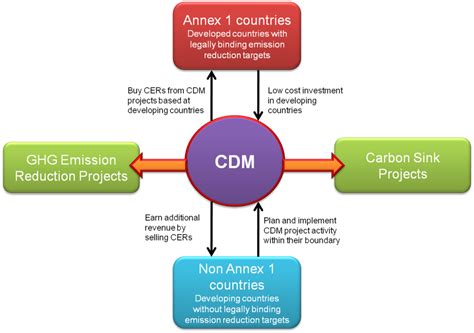
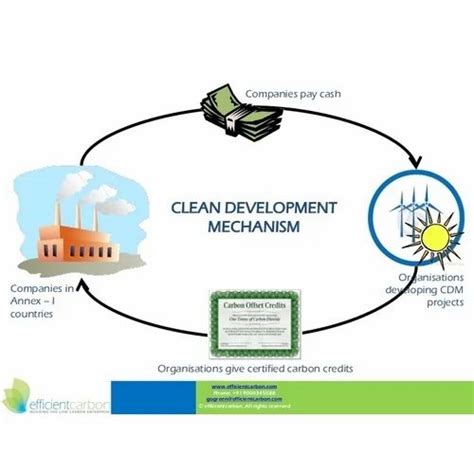
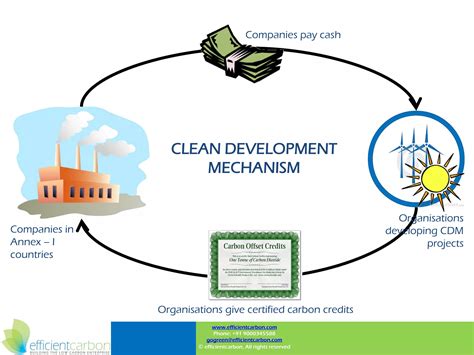
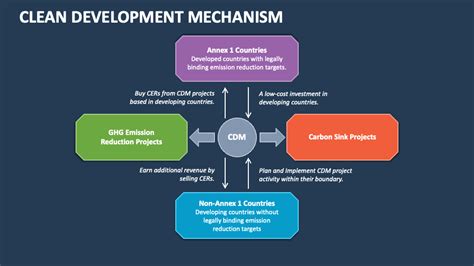
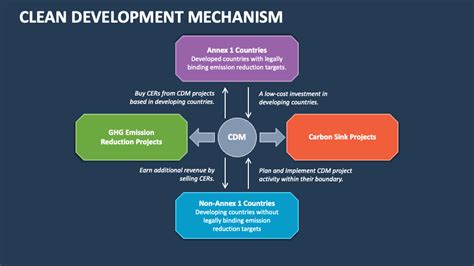
The Clean Development Mechanism (CDM) is a flexibility mechanism under the Kyoto Protocol of the United Nations Framework Convention on Climate Change (UNFCCC). It allows countries to implement emission-reducing projects in developing countries and receive certified emission reductions (CERs) that can be traded on the international carbon market. The CDM aims to promote sustainable development and reduce greenhouse gas emissions in developing countries while providing financial benefits to project developers.
How the Clean Development Mechanism Works
The CDM process involves several steps: * Project identification: Identifying potential projects that can reduce greenhouse gas emissions in developing countries. * Project design: Designing the project and preparing a project design document (PDD) that outlines the project’s methodology, baseline, and monitoring plan. * Validation: Validating the project by an independent third-party auditor to ensure it meets the CDM requirements. * Registration: Registering the project with the CDM Executive Board. * Verification: Verifying the project’s emission reductions by an independent third-party auditor. * Certification: Issuing CERs to the project developer upon verification of the emission reductions.
Benefits of the Clean Development Mechanism
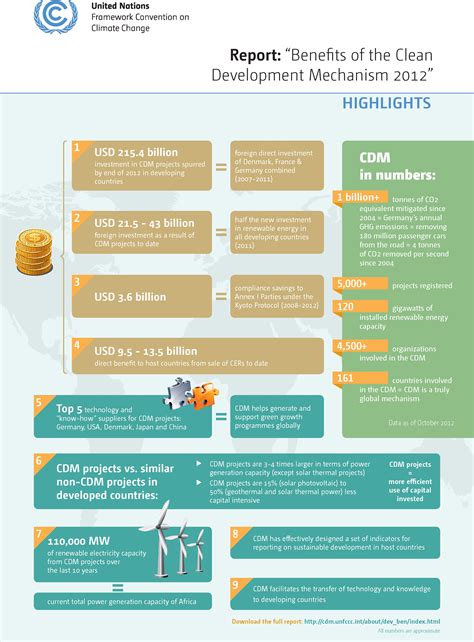
The CDM offers several benefits, including: * Financial benefits: Project developers can sell CERs on the international carbon market, providing a financial incentive for implementing emission-reducing projects. * Sustainable development: CDM projects can promote sustainable development in developing countries by providing access to clean energy, improving energy efficiency, and reducing air pollution. * Technology transfer: CDM projects can facilitate the transfer of clean technologies from developed to developing countries. * Global emission reductions: CDM projects can contribute to global emission reductions, helping to mitigate climate change.
Challenges and Limitations of the Clean Development Mechanism
Despite its benefits, the CDM faces several challenges and limitations, including: * Complexity: The CDM process can be complex and time-consuming, requiring significant resources and expertise. * High transaction costs: The cost of developing and implementing a CDM project can be high, making it challenging for small-scale projects to participate. * Lack of additionality: Some CDM projects may not be additional, meaning they would have been implemented anyway, even without the CDM. * Environmental and social concerns: CDM projects can have negative environmental and social impacts if not properly designed and implemented.
🌟 Note: The CDM has undergone several reforms to address these challenges and limitations, including the introduction of a new simplified modalities and procedures for small-scale projects.
Examples of Clean Development Mechanism Projects
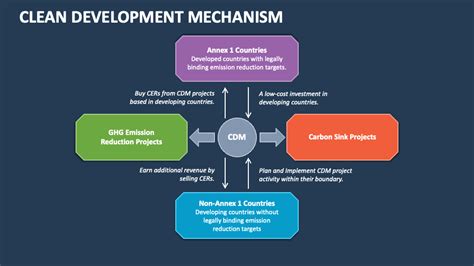
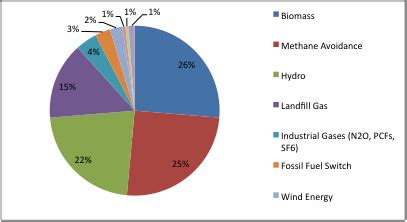
The CDM has supported a wide range of projects, including: * Renewable energy projects: Wind farms, solar power plants, and hydroelectric power plants. * Energy efficiency projects: Improving energy efficiency in buildings, industries, and transportation systems. * Land use and forestry projects: Afforestation, reforestation, and sustainable forest management. *
| Project Type | Number of Projects | CERs Issued |
|---|---|---|
| Renewable energy | 1,500 | 100 million |
| Energy efficiency | 1,000 | 50 million |
| Land use and forestry | 500 | 20 million |
| Waste management | 200 | 10 million |
Future of the Clean Development Mechanism
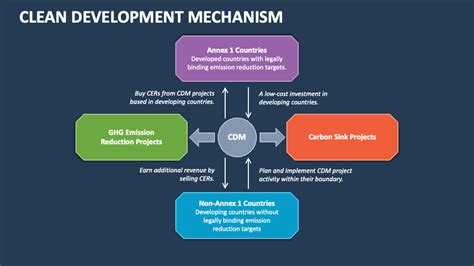
The CDM has played an important role in promoting sustainable development and reducing greenhouse gas emissions in developing countries. However, its future is uncertain, and it is being replaced by the Sustainable Development Mechanism (SDM) under the Paris Agreement. The SDM aims to promote sustainable development and reduce greenhouse gas emissions while ensuring that projects are environmentally and socially sound.
In summary, the Clean Development Mechanism has been a crucial tool for promoting sustainable development and reducing greenhouse gas emissions in developing countries. While it faces several challenges and limitations, it has supported a wide range of projects and has provided financial benefits to project developers. As the world transitions to the Sustainable Development Mechanism, it is essential to learn from the successes and challenges of the CDM and ensure that future projects are environmentally and socially sound.
What is the Clean Development Mechanism?
+
The Clean Development Mechanism is a flexibility mechanism under the Kyoto Protocol that allows countries to implement emission-reducing projects in developing countries and receive certified emission reductions.
How does the Clean Development Mechanism work?
+
The CDM process involves several steps, including project identification, design, validation, registration, verification, and certification.
What are the benefits of the Clean Development Mechanism?
+
The CDM offers several benefits, including financial benefits, sustainable development, technology transfer, and global emission reductions.
What is the future of the Clean Development Mechanism?
+
The CDM is being replaced by the Sustainable Development Mechanism under the Paris Agreement, which aims to promote sustainable development and reduce greenhouse gas emissions while ensuring that projects are environmentally and socially sound.
What types of projects are eligible under the Clean Development Mechanism?
+
The CDM supports a wide range of projects, including renewable energy, energy efficiency, land use and forestry, and waste management projects.